
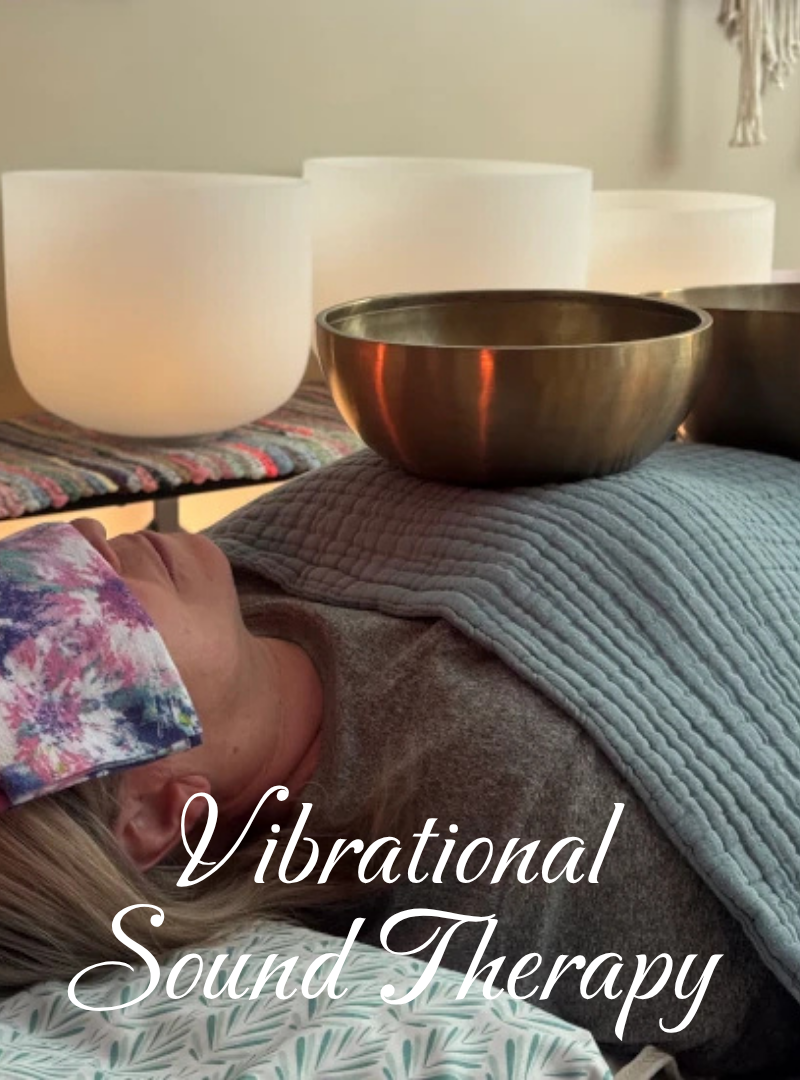
Vibrational Sound Therapy
at Tri Resonance
Looking to reconnect to your body? Ready to align with your true self?
Vibrational Sound Therapy (VST) uses the therapeutic vibrations and tones of Himalayan singing bowls to help calm the nervous system, quiet the mind, and support deep relaxation. But this is not your typical sound bath. Instead of playing gongs, chimes and bowls loud enough to fill a large room and all the bodies in it, VST is a gentle, personalized treatment that activates on the cellular level.
Singing Himalayan bowls are strategically placed directly on and around the body and gently rung, thereby producing vibration, which
Activates the parasympathetic nervous system
Decreases muscle tension
Calms the mind
Improves emotional regulation
For your own personalized VST experience, book your session with Tri Resonance today.
Why Vibrational Sound Therapy?
A Personal Experience
After a brief check-in, your session will include both ambient and on-body sound therapy using Himalayan singing bowls, chimes and more. Unlike a group sound bath, I attune the sounds to you and what you are looking to achieve through your time of rest and sound/energy work.
A Trauma-Informed Modality
Many clients prefer not to be touched, which I fully understand! That’s what makes VST, Reiki and other Tri Resonance offerings an ideal fit for those who have experienced trauma, have PTSD or simply prefer to keep their personal space. My approach is trauma-informed. You will always be asked about your preferences and made aware of where bowls are placed.
Compounding Benefits
A single session will bring you great calm, but there are compounding benefits to regular VST treatments. As you become more comfortable in the space and with the process, you’ll become more relaxed more quickly, allowing additional space for true rest and nervous system reset with each visit.
Book Your VST Session
| 60, 90 or 120-minute individual sessions
| Aromatherapy, grounding, breath and mindfulness coaching included in every session
| May not be combined with the chakra healing mat
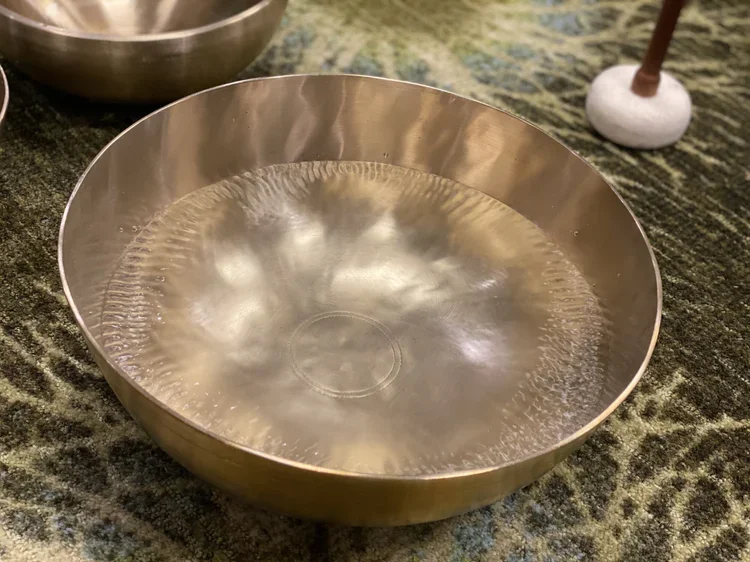
VST requires a measured strike technique to activate the vibration in the bowls. The photo of a water-filled bowl above illustrates how the body, which is made up of 60-70% water, responds to the vibrations.
Frequently Asked Vibrational Sound Therapy Questions
-
In vibrational sound therapy (VST), a practitioner places singing bowls directly on and around your body to activate the parasympathetic nervous system. You remain fully clothed and lie on a massage table, either face down or face up, focusing on your breath and intention while the practitioner plays the bowls with a mallet using a measured strike technique to activate the vibration of the bowl. The low-frequency sound waves and physical vibrations penetrate the body to stimulate the vagus nerve, move fluid and energy at the cellular level, and synchronize brainwaves.
-
First of all, it is very relaxing. VST vibrations lower the heart rate and can help reduce cortisol levels. Many times, clients fall asleep or enter a meditative state after only 10-20 minutes into a session. You will likely need a few minutes and a little light stretching to come back to the surface after your session. It is true self-care!
In recent years, there has been an explosion of research about the benefits of meditation and mindfulness practices, including one study on Tibetan singing bowl meditation, which found that this style of meditation is a low-cost, effective way to reduce stress and anxiety while improving overall well-being, even for those who find traditional "silent" meditation difficult to practice.
Source: Goldsby, T. L., Goldsby, M. E., McWalters, M., & Mills, P. J. (2017). Effects of Singing Bowl Sound Meditation on Mood, Tension, and Well-being: An Observational Study. Journal of Evidence-Based Complementary & Alternative Medicine. https://doi.org/10.1177/2156587216668109
Other benefits of mindfulness and meditation can include:
Reduced blood pressure
Improved immune system functioning and response
Reduced symptoms of depression and anxiety
Improved sleep and emotional regulation
Increased focus and creativity
-
VST rapidly shifts the brain into an alpha state (pre-sleep/daydreaming), triggering the body’s rest-and-repair mode. As heart rate and breathing slow, cortisol levels drop, and the immune system strengthens, redirecting energy from external stressors to internal healing.
As the session progresses, your mind will likely oscillate between the theta (meditation) and delta (deep sleep) states. It is common to experience twitching during these transitions as the nervous system resets. By fostering this internal awareness, sound therapy increases emotional resilience, helping you remain present and less reactive to external triggers.
-
Wear comfortable clothing with no metal buttons or zippers. Think yoga or workout clothes. The day before and day of, be sure to drink more water than normal. Hydration is an important part of preparing for a vibrational sound therapy (VST) session because the body responds best to sound and vibration when it is well hydrated. Since the human body is made up largely of water, around 70%, sound vibrations travel more efficiently through hydrated tissues, helping clients receive the full benefit of the session.
Being well hydrated may also help support:
Relaxation and nervous system regulation
Healthy circulation and energy flow
Muscle release and physical comfort
The body’s natural processing and integration after a session
Some clients feel deeply relaxed or emotionally released after VST, and proper hydration can help support overall balance and recovery afterward as well.
I recommend that my clients avoid strenuous exercise after a session to prolong the treatment's relaxing benefits. Gentle movement, an Epsom salt bath, and extra rest are ideal!
-
Every person is different, and there is no “one-size-fits-all” answer. Some clients notice a sense of calm, relaxation, or improved sleep after just one session, while others experience more meaningful shifts with consistent sessions over time.
The body and nervous system often respond best to regular support—especially when stress, burnout, anxiety, grief, emotional overwhelm, or chronic tension have been building for a long time. Just like massage, therapy, or exercise, consistency can help create deeper and longer-lasting results.
At Tri Resonance, sessions are personalized to meet you where you are. Many clients choose to begin with a few sessions close together and then transition into regular maintenance sessions to continue supporting their nervous system, emotional well-being, and overall balance.
The goal is not to “fix” you with VST, but to create a supportive space for your body to relax, reset, and reconnect.
-
With VST, there is no physical touch beyond the bowls, which are placed on and near various areas of the body. Like massage, VST releases muscle tension and mitigates the effects of stress. Unlike massage, you do not need to remove your clothing and will not be sore or bruised after the treatment.
-
I use Himalayan bowls, which are 80% copper-metal, and were specifically created for vibrational sound therapy. I also have a harmonic crystal bowl set, Japanese Rin Gong bowls, a chakra master set of 7 Himalayan bowls from Nepal, and a 22” grounding bowl for standing in.
-
If you are ill and possibly contagious, please reschedule. It can sometimes make you feel worse. Additionally, VST is not recommended for anyone with an infectious skin condition, a pacemaker, severe unexplained internal pain, hemophilia, metastatic cancer, organ failure or if you are pregnant or trying to conceive.
-
Not with bowls placed on the body. But a “sound bath” works great for groups. This is where bowls, chimes, and gongs are played around the room to create a relaxing, meditative environment.
-
The vibrations from the bowls on the body will damage the mat. You can add on time at the end of your session to use the mat if you have no medical conditions prohibiting the use of the mat.